DOC-M2F2 / NASA-803.A.01
Archive Live
Unclassified · NASA FRC Technical Reference

NASA / NORTHROP CORPORATION M2-F2 «LIFTING BODY»

Heavyweight wingless research aircraft built to prove that a blunt, half-cone body could generate enough lift for a controlled atmospheric reentry and a precise unpowered runway landing — the aerodynamic path that later shaped the Space Shuttle.

Max Speed (glide)
M 0.707@ alt
Release Ceiling
13 716m
Thrust (XLR-11)
35.6kN
Empty Mass
2 096kg
Gross Weight
2 722kg
01.0

Platform Overview

Mission Architecture
Designation
Northrop M2-F2 / NASA 803
Role
Lifting-body technology demonstrator
Crew
1 research pilot
First Flight
12 July 1966
Status
Rebuilt as M2-F3

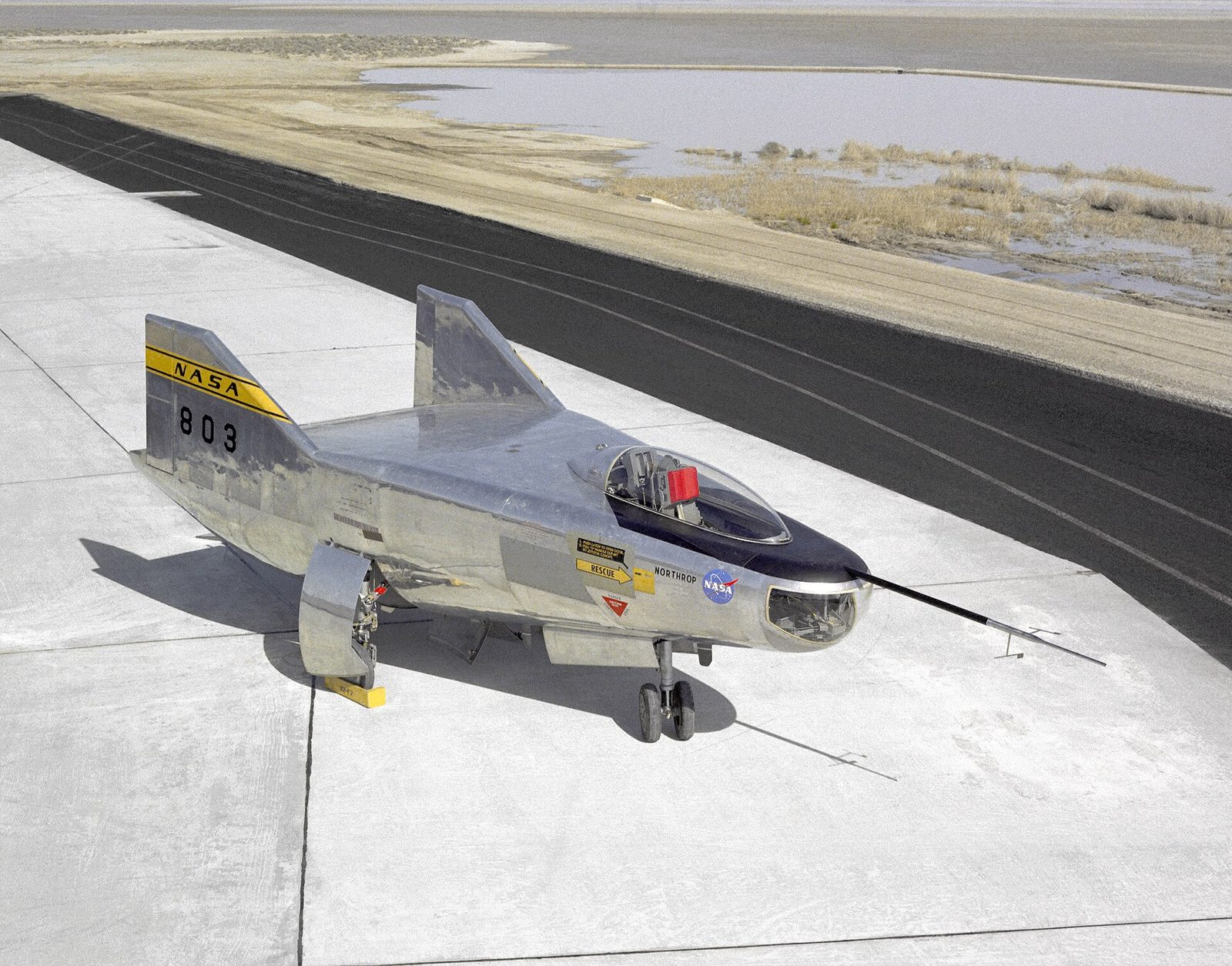
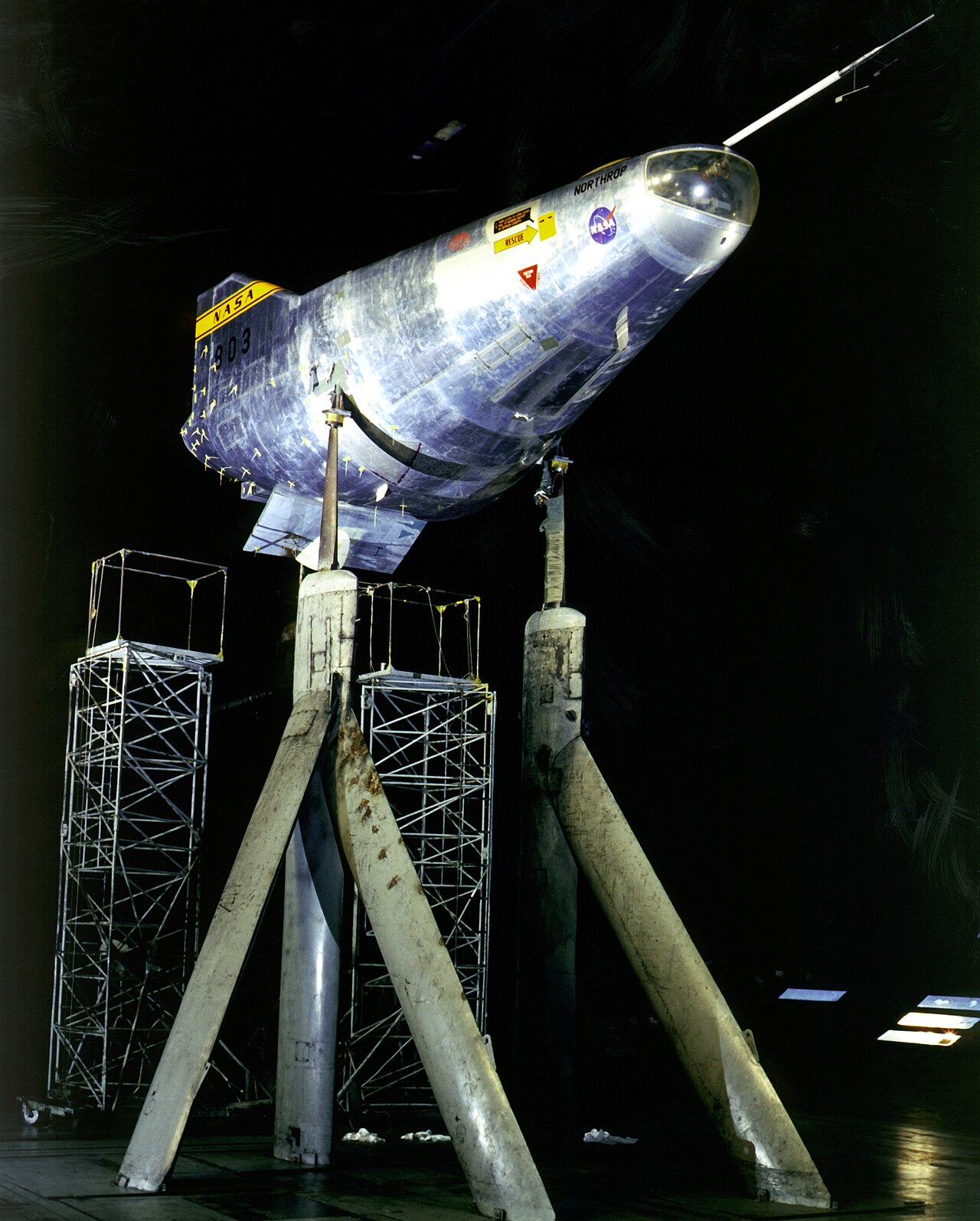
The Northrop M2-F2 was the first of NASA’s heavyweight, entry-configuration lifting bodies — a metal evolution of Dryden’s plywood M2-F1 “flying bathtub.” The “M” stands for manned, the “F” for flight version. Shape came from Ames and Langley wind-tunnel work: a modified half-cone with a rounded bottom, flat upper surface, blunt nose, and twin vertical fins.

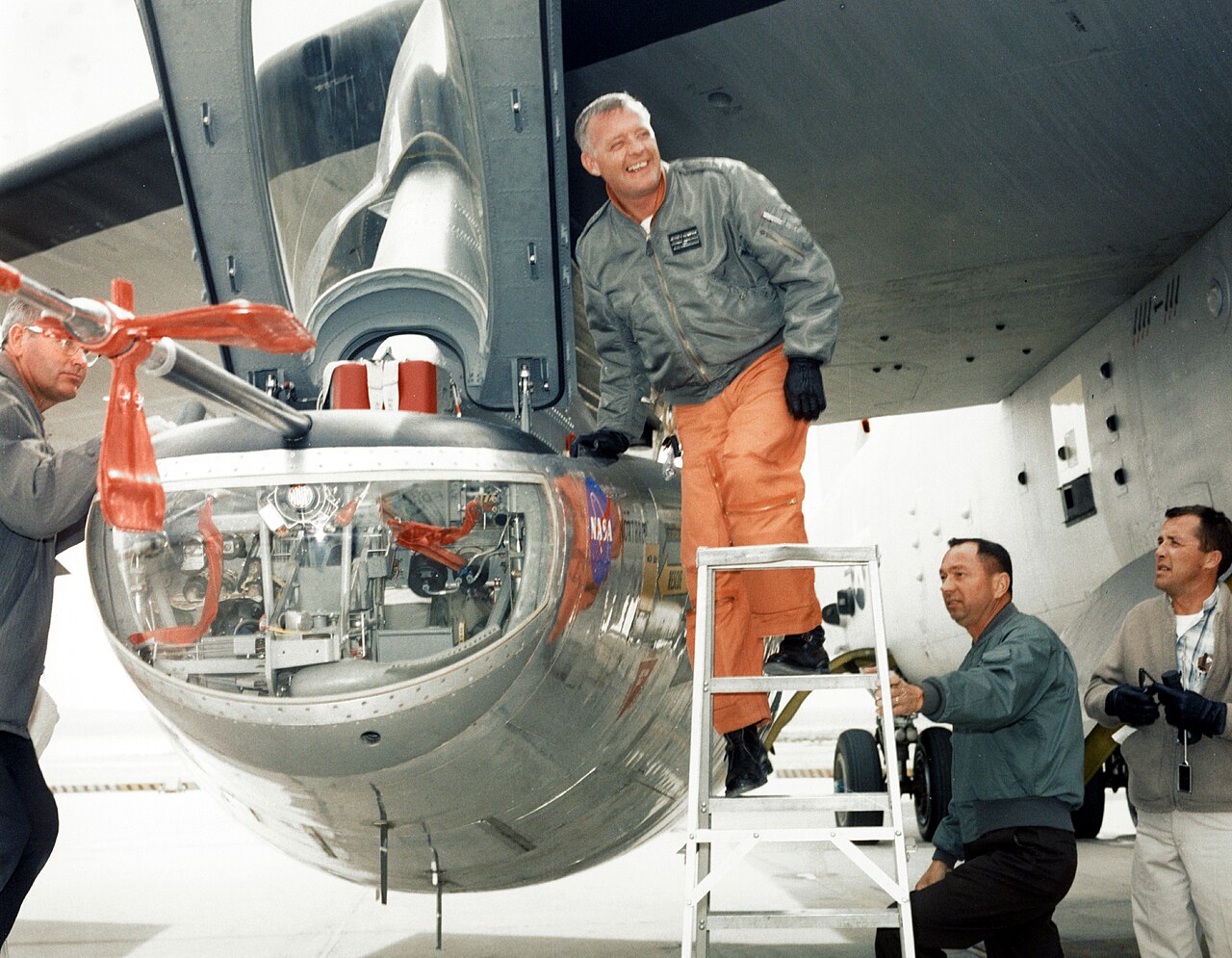
NASA awarded Northrop the contract in June 1964. The finished vehicle reached the Flight Research Center (now Armstrong) in June 1965. It was air-launched from a modified NB-52 mothership at about 45,000 ft — the same pylon used for the X-15 — then glided to Rogers Dry Lake. Although an XLR-11 rocket was later installed, every M2-F2 flight remained unpowered.

OPERATIONAL NOTE: Sixteen glide flights between 12 July 1966 and 10 May 1967 proved the configuration could fly and land, but also exposed weak roll authority, Dutch-roll coupling, and pilot-induced oscillation (PIO) on the lakebed approach. Flight 16 ended in a cartwheel crash. The airframe was rebuilt with a third central fin and redesignated M2-F3.

Data from the M2 series — together with the HL-10 and X-24 — convinced NASA that an unpowered horizontal landing was viable for a reusable orbital vehicle, and helped retire the idea of landing jets on the Space Shuttle orbiter.
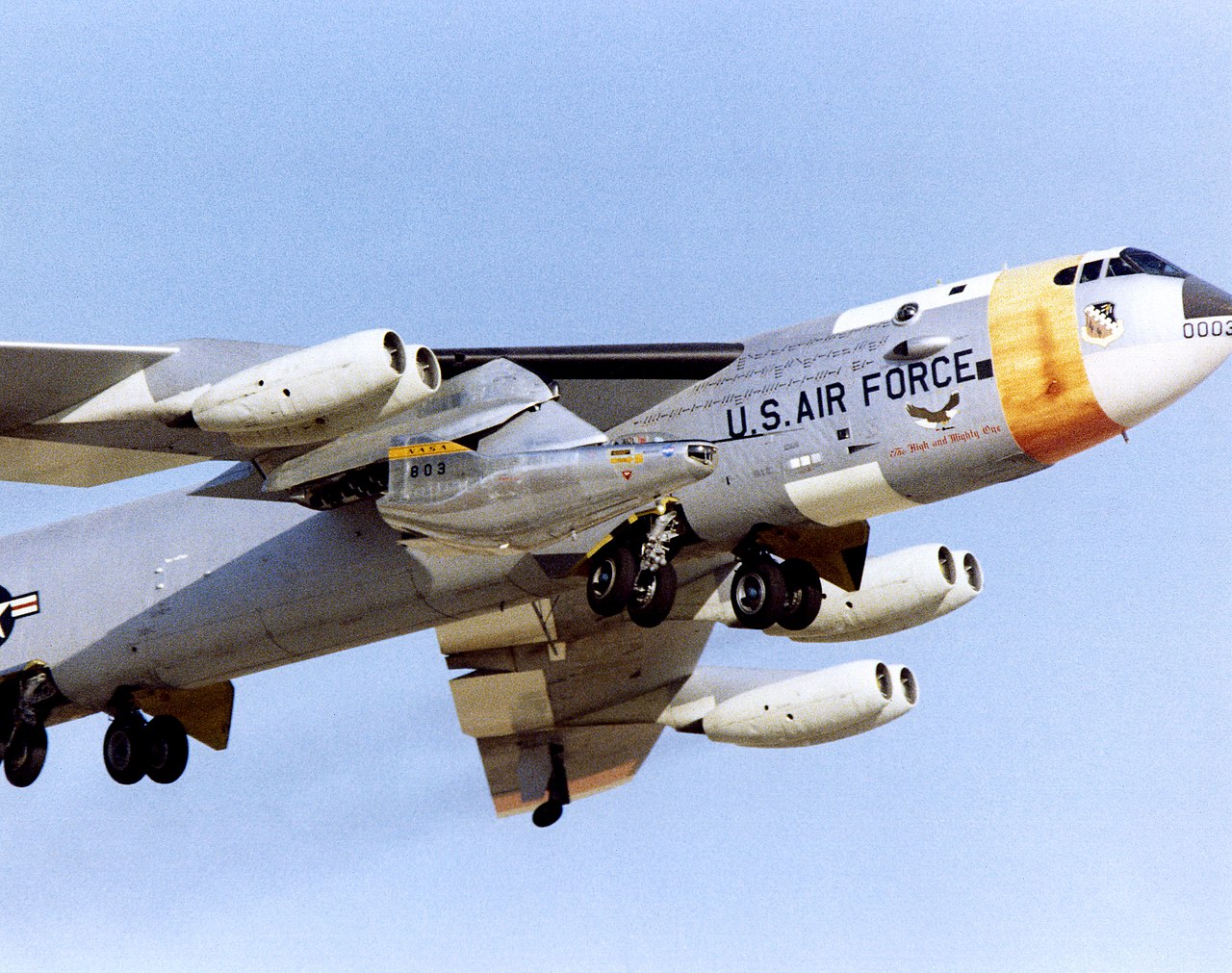
M2-F2 lifting body carried aloft under the wing of a NASA B-52 mothership
FIG 01 — M2-F2 on B-52 pylon · ECN-1436 NASA / Wikimedia
02.0

Airframe Geometry

Orthographic · Dimensions
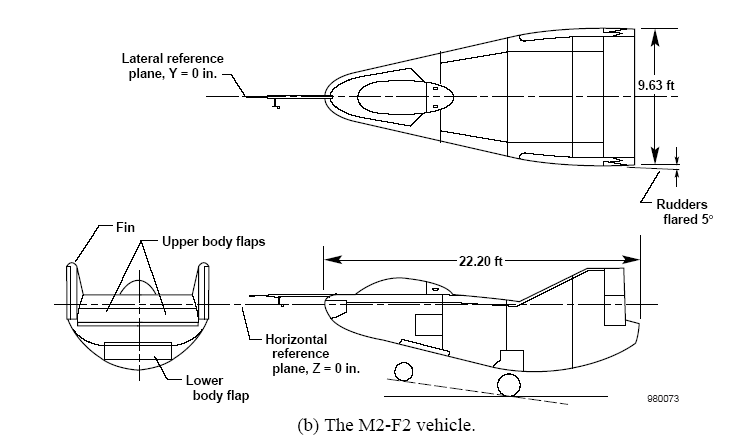
NASA three-view diagram of the Northrop M2-F2 lifting body
FIG 02 — Three-view recognition plate NASA / Wikimedia PD
02.1 · Principal DimensionsNASA 803
Length6.76 m (22 ft 2 in)
Span (effective)2.95 m (9 ft 8 in)
Height2.90 m (9 ft 6 in)
Planform / “wing” area14.9 m² (160 ft²)
ConfigurationHalf-cone lifting body · twin fins
Wing loading
43.2
lb/sq ft
Lift from fuselage, not wings
L/D (subsonic)
~2.8
ratio
Steep glide · Shuttle-class
Approach path
−25°
class
High sink · late flare
Roll authority
LOW
body-as-wing
Core PIO driver on Flt 16
03.0

Technical Data Sheet

M2-F2 Baseline
03.1 · General CharacteristicsTDS-M2F2
Crew1 pilot
Length overall6.76 m (22 ft 2 in)
Span2.95 m (9 ft 8 in)
Height2.90 m (9 ft 6 in)
Planform area14.9 m² (160 ft²)
Empty weight2 096 kg (4 620 lb)
Gross weight2 722 kg (6 000 lb)
Max takeoff weight3 395 kg (7 485 lb)
Powerplant1 × Reaction Motors XLR-11
Thrust (installed)35.6 kN (8 000 lbf)
Launch methodNB-52 pylon drop · ~Mach 0.6–0.8
03.2 · Performance EnvelopePERF-M2F2
Max speed (glide)Mach 0.707 / 750 km/h
Typical release13 716 m (45 000 ft)
Service ceiling (carried)14 000 m (45 900 ft)
Stall speed (approx.)200 km/h (124 mph)
First-flight landing~320 km/h
Glide ratio~2.5 : 1 to 3.0 : 1
Range (spec table)15.9 km (8.6 nmi)
Thrust / weight1.3 (engine installed)
Flights as M2-F216 unpowered glides
Powered M2-F2 sortiesNone — engine never fired in flight
03.3 · Conceptual Glide Corridor (schematic) NOT FOR FLIGHT USE
MACH NUMBER → ALTITUDE (km) → 0 0.3 0.5 0.707 0.9 0 5 10 13.7 15 MAX M0.707 B-52 RELEASE ~13.7 km DROP LAKEBED FLARE FLT 16 PIO / CRASH
04.0

Propulsion System

Reaction Motors XLR-11
04.1 · Powerplantinstalled, never fired in M2-F2 flight
EngineReaction Motors XLR-11 (Thiokol LR-11)
TypeFour-chamber liquid rocket
Thrust35.6 kN (8 000 lbf) combined
PropellantsLOX + 50% water / ethyl alcohol
IgnitionHydrogen-peroxide starter
VectoringNone — fixed engine, aero control
Design burn~120 s / ~200 gal propellant
HeritageSurplus X-1 / X-15-class chambers

The M2-F2 was designed as a rocket-powered follow-on to the unpowered M2-F1. After the 21 November 1966 glide, the vehicle was grounded 5.5 months while engineers led by Meryl DeGeer fitted the XLR-11 and worked stability issues seen on the B-52 drops.

Two checkout glides with the engine aboard — Flight 15 (Jerry Gentry, 2 May 1967) and Flight 16 (Bruce Peterson, 10 May 1967) — were intended to clear the vehicle for powered work up to about Mach 2. Flight 16 crashed. The rocket was never lit on an M2-F2 mission.

POWERED LEGACY: After rebuild as M2-F3, the same class of XLR-11 propulsion was used in anger. M2-F3 reached Mach 1.6 (~1 712 km/h) and 71 500 ft before retirement in 1972.
Chambers
04
throttleable
T/W empty
1.3
ratio
M2-F2 burns
00
in flight
M2-F3 Vmax
M 1.6
powered
05.0

Flight Systems

Controls · Telemetry · Safety

Flight Controls

  • PrimaryElevons / flaps
  • HydraulicsIrreversible electro-hydraulic
  • FeelArtificial-feel feedback
  • SASRate dampers (on/off tested)
  • LimitLow roll damping · adverse yaw

Avionics / Data

  • NavBasic inertial attitude ref.
  • TelemetryPCM · 77 channels
  • ParamsAccel, attitude, surface pos.
  • ChaseF-104 / F5D escort typical
  • CarrierNB-52 pylon adapter

Ballast & CG

  • BallastInternal water tanks
  • PurposeCG / configuration tests
  • NoseFiberglass shaping cap
  • SkinAluminium alloy semi-monocoque
  • BayInternal XLR-11 volume

Crew Safety

  • SeatRocket-powered ejection
  • EnvelopeFull research envelope
  • LandingRetractable gear · lakebed
  • RescueHelicopter on station
  • NoteHelo distraction on Flt 16
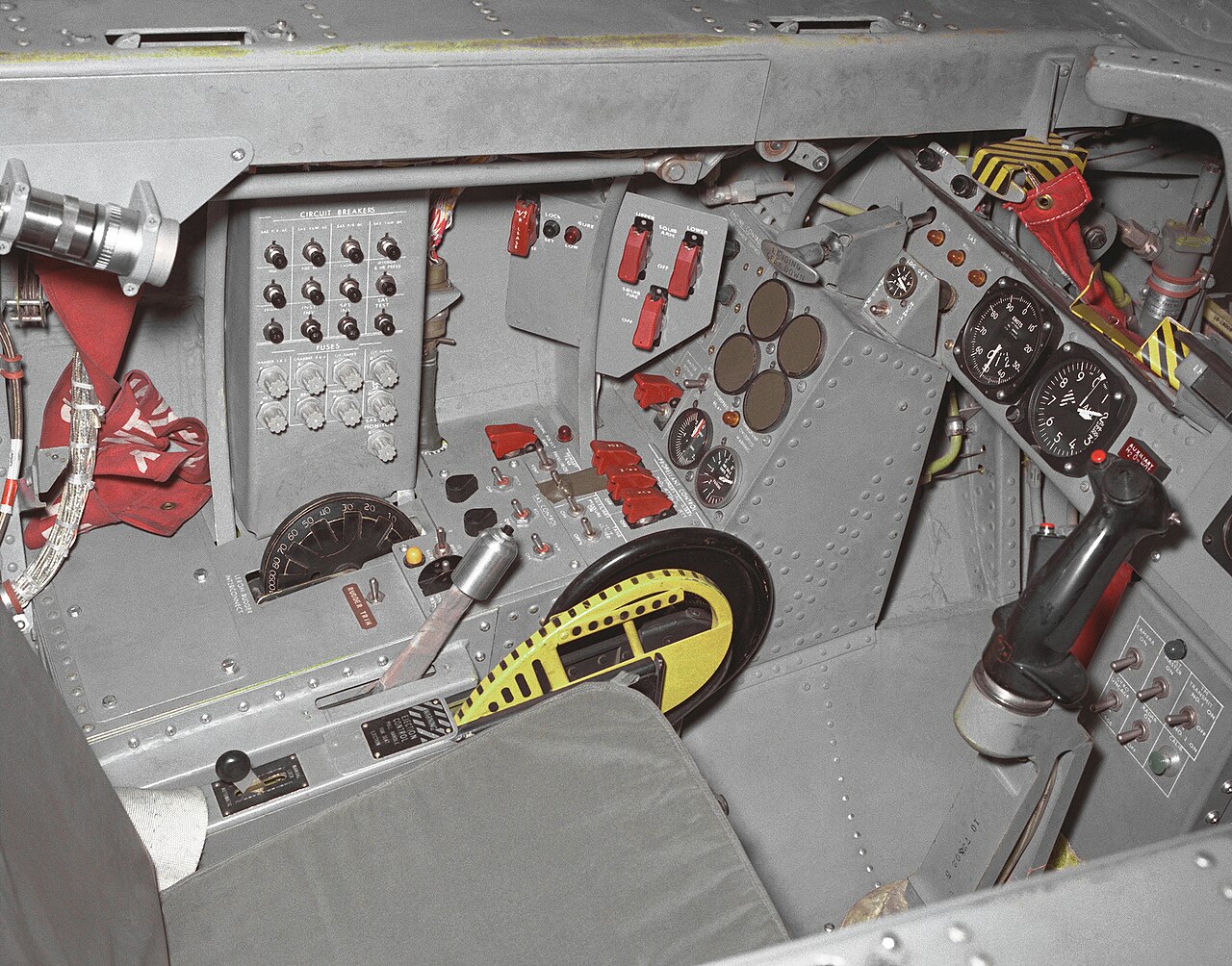
Left-side cockpit instrument panel of the M2-F2
FIG 03 — Cockpit left panel NASA / Wikimedia
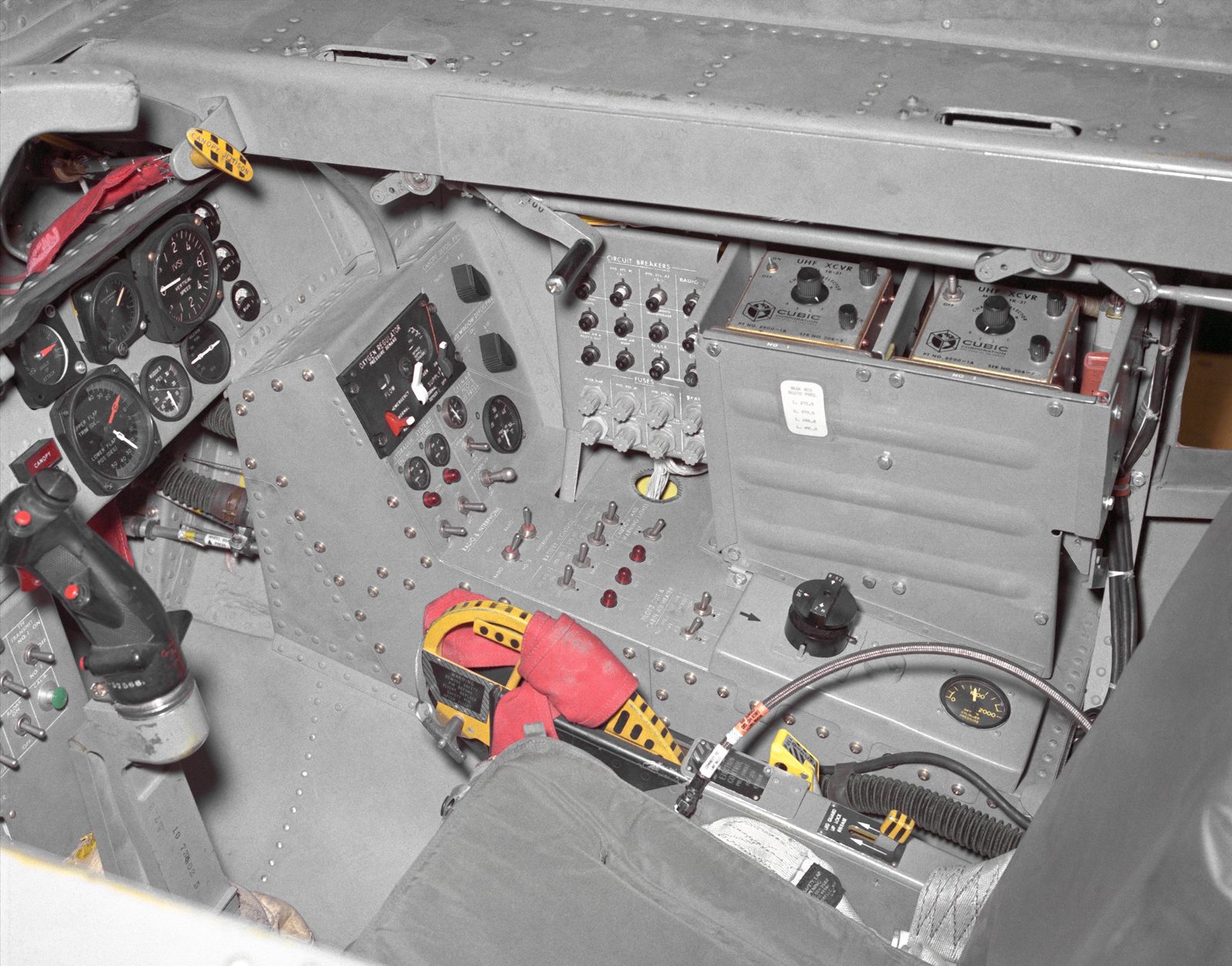
Right-side cockpit instrument panel of the M2-F2
FIG 04 — Cockpit right panel NASA / Wikimedia
06.0

Flight Operations

16 Glides · Rogers Dry Lake
Milt Thompson
05
flights · first flight
Jerry Gentry
05
flights · USAF
Don Sorlie
03
flights · checkout
Bruce Peterson
03
flights · crash Flt 16

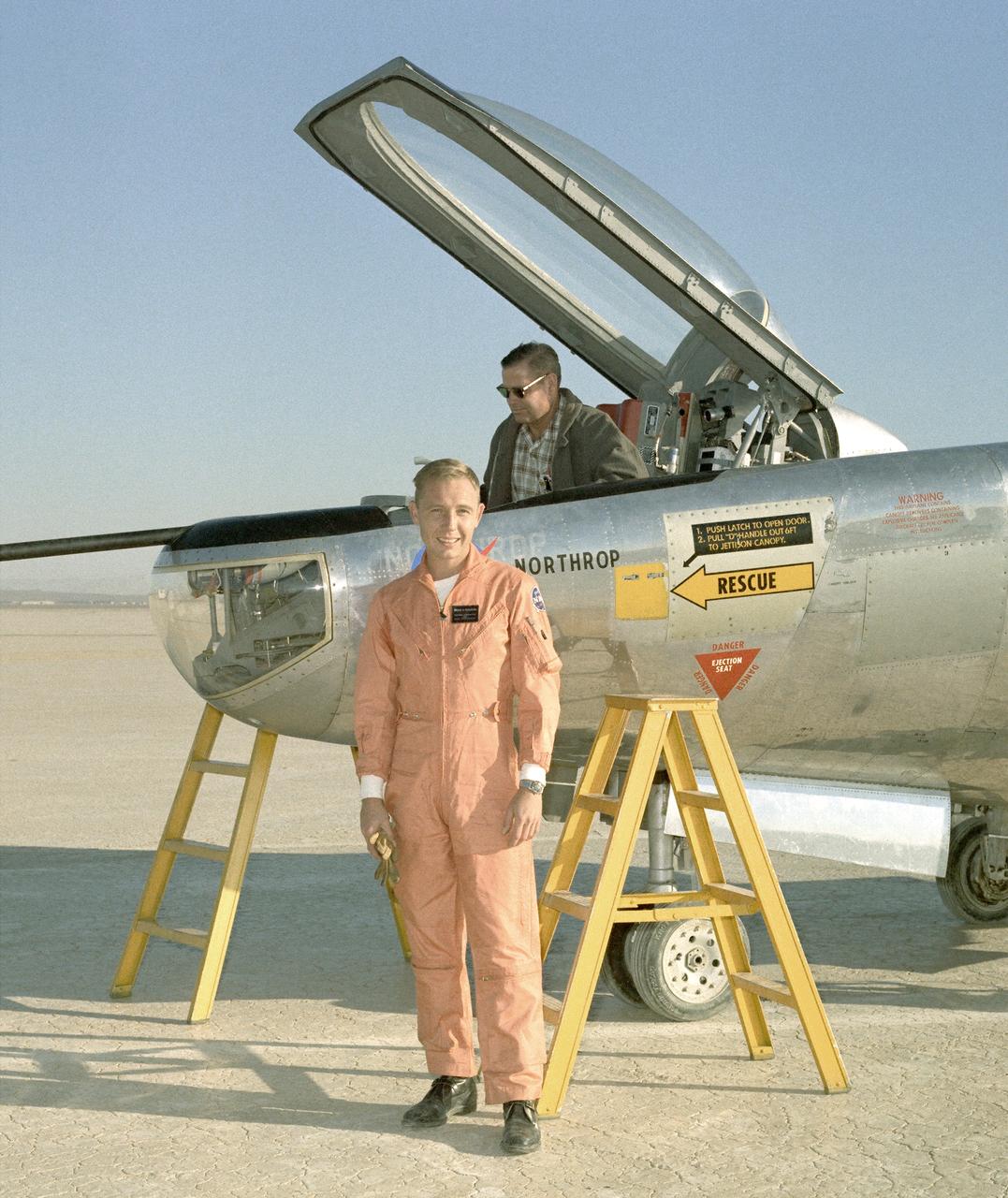
Captive carriage began 23 March 1966. Milton O. Thompson made the first free glide on 12 July 1966: dropped from 45,000 ft, peaked near 727 km/h, and landed at about 320 km/h on the packed clay of Rogers Dry Lake. Subsequent sorties mapped damper-on and damper-off handling, flap effectiveness, and the 360° overhead approach that would become a lifting-body signature.

Flt Date Pilot Mach km/h Alt m Time Comments
#11966-07-12Thompson0.64672713 71603:37First M2-F2 flight. Unpowered glide. ~320 km/h landing.
#21966-07-19Thompson0.59863413 71604:05Lateral stability, longitudinal trim, landing characteristics.
#31966-08-12Thompson0.61969213 71604:38Increasing Mach, minimum damper requirements, S&C.
#41966-08-24Thompson0.67671813 71604:01Damper needs, L/D, elevon response, flap effectiveness.
#51966-09-02Thompson0.70775013 71603:46360° overhead approach. Damper-off handling. Fastest M2-F2 Mach.
#61966-09-15Peterson0.70575013 71603:30Pilot checkout.
#71966-09-20Sorlie0.63567813 71603:31Pilot checkout.
#81966-09-22Peterson0.66170213 71603:53Longitudinal and lateral S&C with dampers.
#91966-09-28Sorlie0.67271313 71603:53Complete checkout; extend envelope.
#101966-10-05Sorlie0.61569213 71603:45S&C with dampers on and off.
#111966-10-12Gentry0.66270213 71603:54Pilot checkout.
#121966-10-26Gentry0.60564213 71603:47S&C at 7° and 11° AoA; upper-flap effectiveness.
#131966-11-14Gentry0.68171613 71604:21Stability, control, and performance.
#141966-11-21Gentry0.69573513 71603:50Last glide before XLR-11 installation layover.
#151967-05-02Gentry0.62366113 71603:51Post-engine-install checkout glide.
#161967-05-10Peterson0.61264913 71603:43PIO on approach. Gear not locked. Cartwheel crash on lakebed.
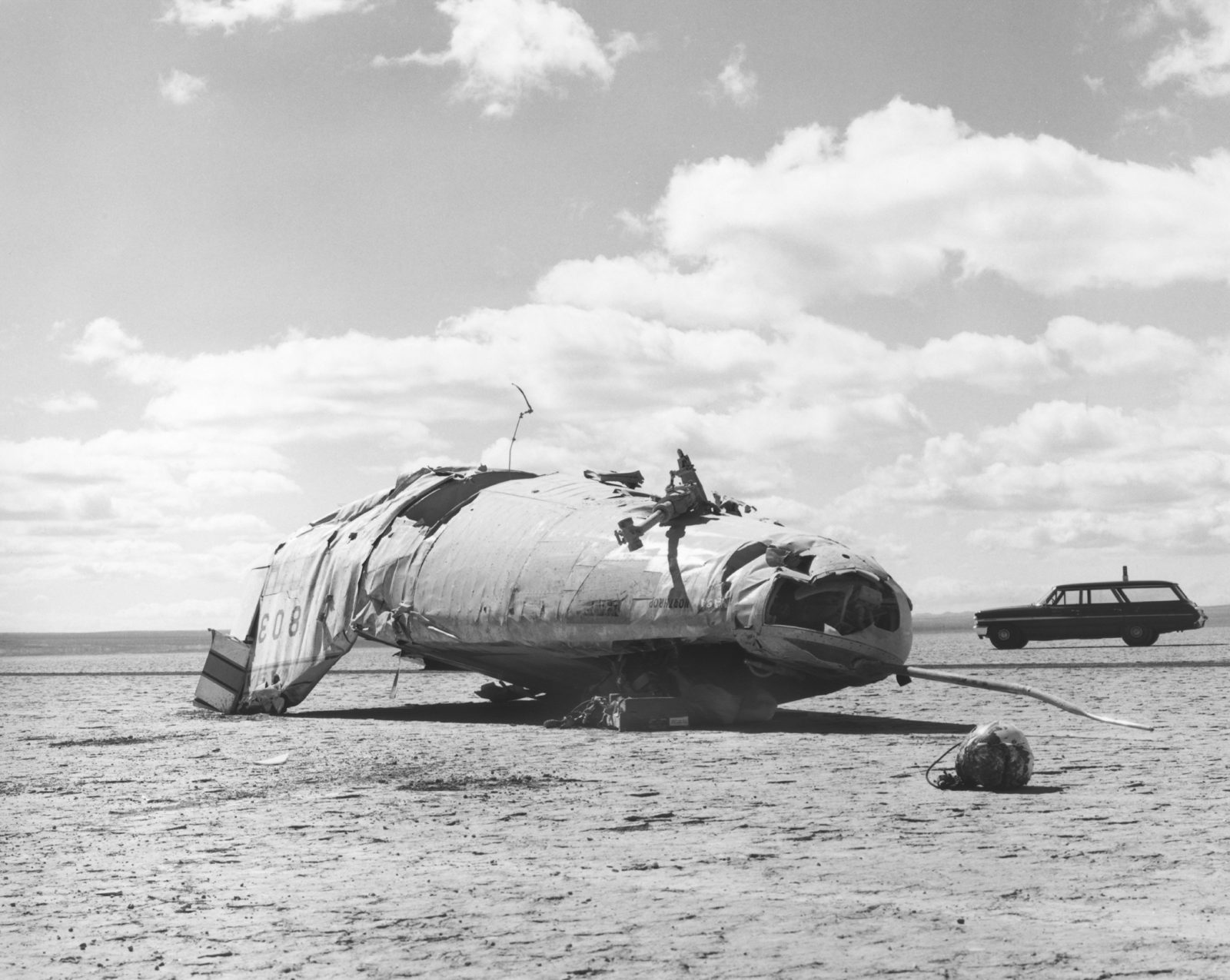
10 MAY 1967 — FLIGHT 16: Peterson entered a U-shaped three-leg approach. Near 7,000 ft a lateral PIO grew into coupled roll/yaw (Dutch roll) with roll rates reported above 200°/s. He recovered after ~11 seconds but was offset from the marked lakebed runway. A rescue helicopter appeared to pose a collision threat. Height cues vanished over unmarked clay. Landing rockets were fired; the gear was not fully down and locked. Impact ~250 mph, bounce ~80 ft, then six end-over-end cartwheels. Peterson survived with skull fracture, facial trauma, and later loss of vision in the right eye from infection.
06.1 · Investigation findingsNASA FRC board
Primary causePilot-induced oscillation at low AoA preflare
Airframe factorsInsufficient fin authority · roll-spiral coupling
ContributorsOffset landing area · helicopter distraction
Immediate actionProgram hold · HL-10 temporarily grounded
FixThird central fin + SAS → M2-F3
Cultural noteCrash film used in The Six Million Dollar Man
M2-F2 wreckage on Rogers Dry Lake after the 10 May 1967 crash
FIG 05 — Crash site · Rogers Dry Lake · GPN-2000-000089 NASA / Wikimedia
07.0

Vehicle Family

Lifting Body Program
PRECursor · WOOD

NASA M2-F1

Homebuilt plywood-and-steel “flying bathtub.” Towed by Pontiac and later C-47. Proved the half-cone could be flown by a pilot before NASA spent metal-airframe money.

1963–1966 · lightweight
THIS VEHICLE · NASA 803

Northrop M2-F2

First heavyweight Ames shape. Twin fins, aluminium semi-monocoque, B-52 launch, XLR-11 bay. Sixteen glides. Destroyed in landing crash; airframe salvaged.

1966–1967 · unpowered
REBUILD · CENTER FIN

Northrop M2-F3

Third vertical fin, RCS roll jets, refined SAS. 27 flights 1970–1972 including powered runs to Mach 1.6 / 71,500 ft. Preserved at the National Air and Space Museum.

1970–1972 · powered
LANGLEY SHAPE

Northrop HL-10

Negative-camber “horizontal landing” body. Best-handling of the original heavyweights; program altitude and speed records. Bruce Peterson also made its first flight.

37 flights
USAF / MARTIN

X-24A / X-24B

Air Force SV-5 / X-24 line flown in parallel at Edwards. X-24A later informed X-38 crew-return studies. Often photographed with M2-F3 and HL-10 on the lakebed.

joint program
DESCENT PATH

Shuttle · Dream Chaser

Unpowered runway landing of a low-L/D reentry vehicle is the operational payoff. Sierra Space Dream Chaser inherits the lifting-body idea via HL-20 / HL-10 geometry.

legacy
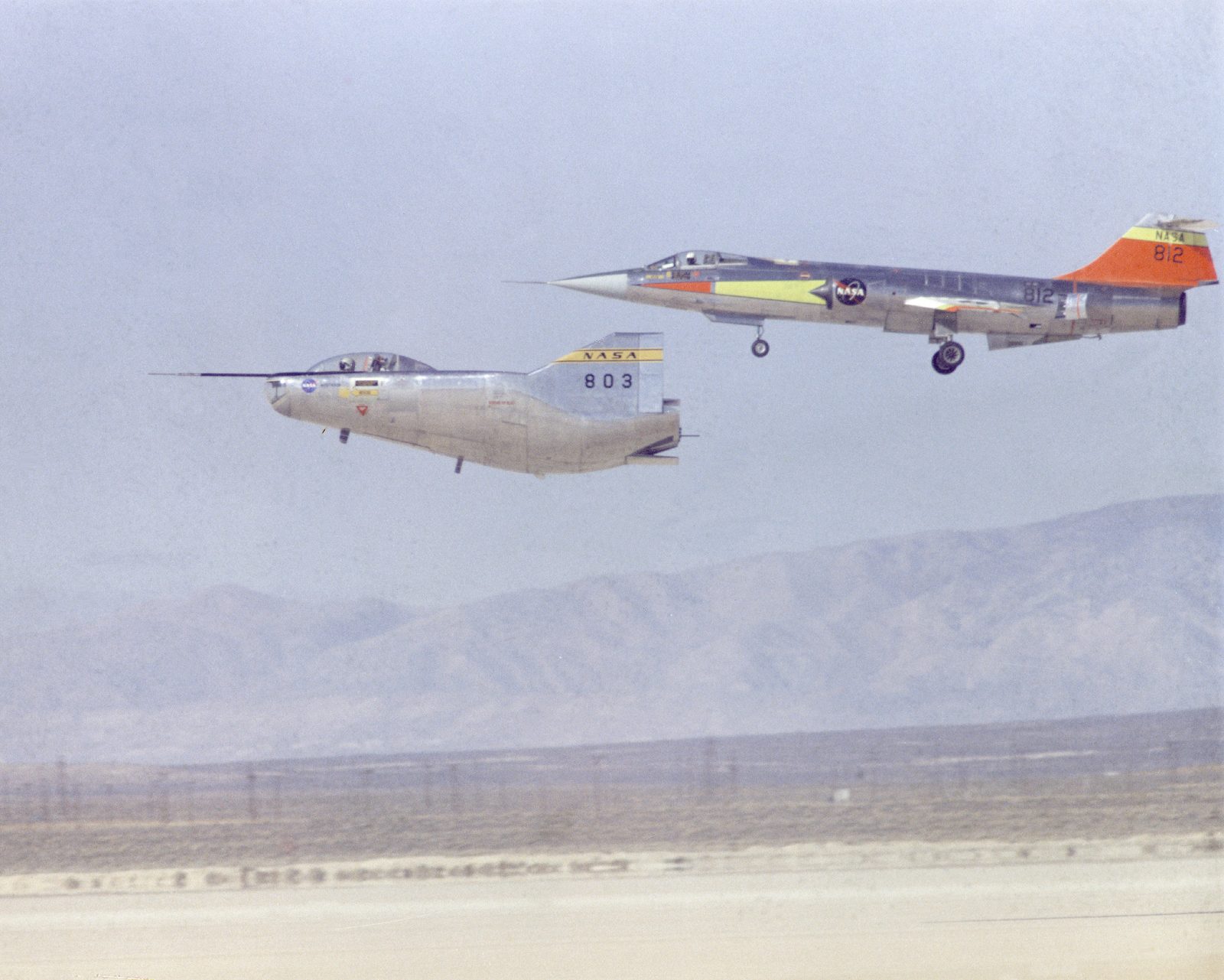
M2-F2 landing on Rogers Dry Lake with an F-104 chase plane
FIG 06 — Lakebed landing with F-104 chase · GPN-2000-000150 NASA / Wikimedia
08.0

Structure & Materials

Heavyweight Airframe

Unlike the M2-F1’s tube-and-plywood shell, the M2-F2 used an aluminium-alloy semi-monocoque: skin panels over stringers and bulkheads, sized for rocket loads and B-52 pylon carriage. A fiberglass nose set the blunt entry contour and served as a thermal/shape cap rather than a full heat shield — this was an atmospheric research vehicle, not an orbital reentry article.

Outboard vertical fins supplied what little directional stability the half-cone possessed. After Flight 16 those fins, the canopy, and the main gear were among the wreckage. Reconstruction added a central fin on the upper surface, moved mass forward, and improved cockpit visibility — the difference between M2-F2 and M2-F3 in every three-view.

08.1 · Structural mixqualitative
Aluminium primary
primary
Fiberglass nose
shaping
Systems / engine
internal

Not a mass-fraction pie — the M2-F2 was a unique research article. Bars indicate where the airframe’s identity lived: aluminium structure, composite nose fairing, and a large internal rocket bay that flew as dead weight on every M2-F2 glide.

10.0

Program Timeline

Chronology
1957–1962

Ames / Langley theory

Allen and Eggers show a blunt lifting body can reach L/D ~1.5. NASA FRC proposes cheap flight test instead of capsules-only reentry.

1963–1964

M2-F1 then Northrop contract

Wooden M2-F1 validates the shape. June 1964: Northrop hired to build the heavyweight M2-F2 (and HL-10).

1965-06

Delivery to FRC

Vehicle arrives at Edwards. Ames 40×80 tunnel work continues; 100 tunnel hours logged in two weeks that August.

1966-03-23

First captive flight

Carried aloft on the B-52 without release. Systems and pylon compatibility.

1966-07-12

First free glide — Thompson

Drop from 45,000 ft. The heavyweight Ames shape flies.

1967-05-10

Flight 16 crash — Peterson

PIO, offset lakebed, six cartwheels. Program halted. Footage later opens The Six Million Dollar Man.

1968–1970

Rebuild as M2-F3

Third fin, SAS, RCS. ~$700,000. First M2-F3 glide 2 June 1970, Bill Dana.

1970–1972

Powered research, then museum

27 M2-F3 flights to Mach 1.6 / 71,500 ft. Final flight 20 December 1972. Airframe preserved at NASM.

10.1 · Design driverssummary
Primary questionCan a wingless body land on a runway?
Design philosophyShape-as-wing · low L/D · precise flare
Not optimized forCruise · endurance · combat
Immediate successorM2-F3 (same article, third fin)
Program payoffShuttle unpowered landing confidence
M2-F1PROOF

Does the half-cone fly?

Low-cost plywood article. Tow tests before any heavyweight metal was cut.

PONTIAC / C-47 TOWDRYDEN HOMEBUILT
M2-F2SCALE-UP

Does a reentry-weight ship still fly?

Aluminium, B-52 launch, rocket bay, research instrumentation. Answer: yes, until the landing.

16 GLIDESNASA 803
M2-F3CONTROL

Can the PIO be designed out?

Center fin and SAS. Then open the envelope with the XLR-11 and hand the data to Shuttle.

27 FLIGHTSMACH 1.6